


Last updated: Jun 17th, 2011
Chili Peppers / Hot Peppers:
Types, Varieties, Cooking Tips, etc.
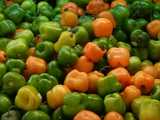
Manzano Peppers
I love hot and spicy foods; I used to cook mostly with pre-made chili sauces. But somewhere along the line, I fell in love with using actual, fresh chili peppers. Fresh peppers open up a whole new world of flavor possibilities, but they can be somewhat difficult to work with as they can be unpredictable. Here I offer some tips on how to cook with hot peppers.
If you are looking for pictures of chili peppers, you will find a large number of pictures in my peppers photo album.
General tips true of all hot peppers:
- The hottest peppers can be dangerous. When handling large numbers of peppers, or when handling the hottest varieties (like habanero) I recommend using gloves, and thoroughly washing any surfaces the peppers contact. This is not necessary when cutting up a single pepper, or using milder hot peppers (yes, a Jalapeno is considered "milder" in this context), but it is still very important to avoid touching your eyes after handling even a milder hot pepper. If you can taste even a light burn, it is enough to irritate your eyes.
- All varieties of chili pepper can be highly variable in heat. Be especially careful with hotter varieties. A hotter-than-normal Jalapeno can throw you for a loop, but a hotter-than-normal Serrano can be dangerous and inedible to most people.
- The heat in a pepper tends to be concentrated in the membrane (the thin, whitish part of the pepper holding the outside flesh to the seeds) and the seeds, rather than the flesh of the pepper. However, in some varieties, there is still significant heat in the flesh, whereas in others there is little to none. Because there tend to be more seeds at the top of the pepper, closer to the stem, this part of the pepper tends to be hottest. Do not assume a pepper is mild just because the bottom 1/3rd to 1/2 has little to no heat! But you can also use this concentration of heat to your advantage: if a pepper is too hot, carefully cut out and discard the seeds and membrane; if it is milder, throw in the whole thing.
- In general it is good to taste each individual pepper before putting it in something you are cooking, due to variability. You may have a batch of 10 peppers that look identical, but the hottest may be 100 times hotter than the weakest. If you taste the mildest one and then decide to throw all 10 in, you may end up with an inedible meal!
- When tasting the hottest varieties of pepper (like habaneros), start first by cutting the pepper, touching the knife, and licking your finger. Some peppers are too hot to bite into.
- Cooking peppers, especially cooking finely-cut peppers at high temperatures in oil, removes some of their heat. However, when doing this, some of the capsaicin in the peppers will be released into the air, burning your eyes and nose if you get too close to the pan. Be careful!
- Especially when you do not know your audience, it is best to use the hottest peppers only for making optional sauces or salsas to be placed on the side.
Ripe vs. unripe:
Each variety of pepper can be eaten in both its unripe (usually green, or yellow) or ripe (usually red, orange, or purple) form. Some peppers tend to be used more in some forms than others. For example, fresh cayenne peppers sold in Indian stores tend to be green, whereas you can find fresh red cayenne peppers for sale in other types of ethnic food stores.
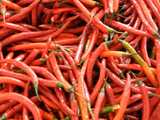 Ripe Chili Peppers |
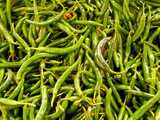 Unripe Chili Peppers |
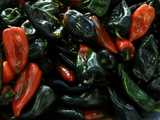 Ripening Poblano Peppers |
Peppers will usually continue to ripen after you pick them. However, they often wrinkle and soften somewhat if left too long, and unlike bananas, they cannot usually be ripened completely. Peppers ripened on the plant often have a superior taste and texture, however, they can be considerably hotter. When buying ripe peppers, seek out ones that are already as ripe as possible and have a firm texture and smooth skin.
Ripe peppers often vary more from their unripe counterparts in terms of flavor and aroma more than one type of pepper varies from another. For example, ripe Cayenne, Jalapeno, Poblano, Cubanelle, and long peppers all become sweeter, fruitier, and obtain more of the aroma characteristics of a red bell pepper, as they ripen. Similarly, green cayenne, long, and serrano peppers all have a fresher aroma than their ripe versions. If you want variety in aroma and flavor, you would do well to pick up both ripe and unripe versions of one pepper when you buy them.
Uses for Peppers:
Salsa:
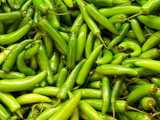
Green serranos are outstanding for making very hot salsa.
Salsa, which just means "sauce" in Spanish, is one of my favorite uses for fresh chili peppers. There are numerous different ways of adding peppers to salsa. They can be finely diced by hand, or chopped up more finely or pureed in a blender. They can also be added raw or cooked.
Dicing chili peppers to add to salsa is a technique that I only recommend using for the milder peppers. The hotter peppers can produce a tremendous (and sometimes unpleasant) surprise if you bite into a larger piece of one. If dicing up a hotter pepper, remove the seeds and membrane first. Hotter peppers are safer if they are pureed or very finely chopped (ideally using a blender), or cooked into a dish, so as to distribute the heat more evenly throughout.
It is often useful to char peppers briefly before adding them to salsa; this produces a smoky or charred flavor which, combined with the pepper's heat, can produce a fiery sensation when eating the salsa. For this purpose I like to use a cast-iron skillet on high heat with no oil, throw in whole chili peppers, giving them only enough time in the skillet to achieve a very thin marking of black in several places. The goal, with this method, is to impart the charred flavor while leaving the inside of the pepper essentially raw.
Raw, Sliced, Served With Soup:
Sliced raw chili peppers are outstanding added raw to soup, right after the soup is served, while it is still hot. My favorite way to do this is to slice the chili peppers very thinly, and place them on a small plate on the side. This allows people to add the peppers to taste, so they are not overwhelmed. I got this idea from the way Pho is typically served in Vietnamese restaurants, with slices of hot peppers on the side. I recommend using peppers of moderate heat (Jalapenos are good) for this, hot enough to notice the kick from an individual slice, but not so hot that a single bite overwhelms a person.
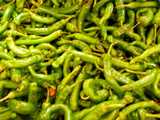
Long Hot Peppers
In Stir Fry:
Adding hot peppers to stir fry (as in a Chinese wok, although I prefer to use a cast iron skillet) is one of my favorite methods of making food spicier. This method cooks out some of the heat, allowing one to cook with hotter peppers than one would otherwise be able to handle, and it also has the advantage that it captures much of the aroma of the peppers in the oil, using it to flavor the dish you are cooking.
You can use any chili peppers in stir fry, just as you can use sweet peppers, but some work better than others. I like the fresher and more aromatic peppers in stir fry, including serrano, hungarian wax pepper, cayenne, Thai chili, and long hot pepper. Of these, however, my favorite is without a doubt the long hot pepper.
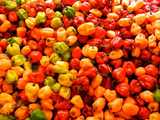
The hottest peppers, like these habaneros, can be dangerous when cooking.
Be careful when making stir fry if you use extremely hot peppers. The capsaicin from the pepper will rise into the air when cooking. With the hottest peppers, this can produce an effect similar to being sprayed with pepper spray, irritating your eyes, nose, and throat, to the point of being debilitating if it is severe enough. Keep your face away from the pan and make sure the area is well ventilated while cooking.
In Heavier, Rich Foods:
Hot peppers make an excellent way to "cut" heavier foods, such as a starchy, meaty casserole, or a savory stew. However, different peppers tend to be useful for this purpose. One of my favorite peppers for this purpose is the Poblano pepper, which has a strong, deep flavor that can hold its own in these rich, warming foods. The poblano is the pepper typically used in chiles rellenos, a dish involving chili peppers fried in cheese and batter. Consider substituting a Poblano where you would otherwise use a bell pepper. For a milder pepper with a similarly deep flavor, try the chilaca pepper.
Think about what kind of flavor you want to impart. Ripe chili peppers will add sweetness and a warming quality, whereas raw peppers of the same variety will usually impart freshness and a cooling quality.
Enjoy your peppers:
I hope you enjoy this page! Let me know if you have any feedback or suggestions.
Comments are moderated. Follow Cazort.net's comment policy for your comment to be approved.
blog comments powered by Disqus